

Pérdidas de orina en mujeres jóvenes
La incontinencia urinaria, también conocida como pérdida de orina, es un problema embarazoso y prevalente sobre todo en mujeres en edad avanzada.
Sin embargo, también puede afectar a mujeres más jóvenes.
Una encuesta realizada a 1.000 jóvenes australianas revelaba que un 13% había tenido incontinencia urinaria durante el mes anterior. Sobre todo, al hacer ejercicio.
Normalmente, las mujeres jóvenes que padecen pérdidas de orina suelen estar inmersas en actividades físicas, laborales y sociales, por lo que el problema les crea situaciones de vergüenza y baja autoestima.
En general, los tipos de incontinencia urinaria más comunes entre las mujeres son
- la de urgencia
- la de esfuerzo,
- aunque también existe la incontinencia mixta
- la vejiga hiperactiva u otros tipos de incontinencia menos frecuentes.
Factores de riesgo
Entre los factores de riesgo o la causas de incontinencia encontramos
- el tabaquismo,
- consumo elevado de cafeína, alcohol y bebidas gaseosas,
- índice de masa corporal elevado,
- sexo femenino,
- antecedente de parto vaginal,
- tos prolongada o enfermedad respiratoria crónica,
- edad avanzada,
- infecciones urinarias recurrentes,
- estreñimiento,
- hipertensión arterial,
- problemas de espalda,
- fármacos (diuréticos, estrógenos, antidepresivos, hipnóticos, laxantes, antipsicóticos,…).

El estudio australiano anteriormente citado, publicado en Annals of Internal Medicine, intentaba revelar los factores de riesgo potenciales de la incontinencia urinaria en las mujeres jóvenes sin hijos.
Dicho estudio concluyó que las mujeres jóvenes que más riesgo tienen de padecer incontinencia son sexualmente activas y las que no utilizan píldoras anticonceptivas.
Cómo prevenir la incontinencia urinaria
En primer lugar se recomienda:
- Beber menos líquido
- Orinar con mayor frecuencia
- Evitar saltar o correr (pueden causar mayor fuga de orina).
- Procurar que las deposiciones sean más regulares (puede empeorar la incontinencia).
- Dejar de fumar para reducir la tos y la irritación de la vejiga
- Evitar el alcohol y la cafeína que pueden estimular la vejiga
- Bajar de peso si sobrepeso
- Evitar alimentos y bebidas que irriten la vejiga, como comidas condimentadas, bebidas carbonatadas y los cítricos.
- Mantener el azúcar en la sangre bajo (si diabetes)
- Ejercicios de entrenamiento de los músculos pélvicos o ejercicios de Kegel para potenciar la musculatura del suelo pélvico
- El tratamiento depende de la gravedad de los síntomas y de qué tanto afecta su vida cotidiana.
- En ciertos casos se recomendará tratamiento farmacológico o incluso cirugía según el tipo de incontinencia, la gravedad o la afectación de la calidad de vida.

[:en]

Urinary Incontinence and the Active Woman – It’s normal, right?
Urinary Incontinence and the Active Woman; There are some actions in the life of an athlete that are mysterious:
- swimmers urinating in the pool,
- marathon runners drawing the line before the finish line,
- and women embracing laughter-leakage as “just life”.
MARCH 7, 2016 ~ GARRETT BULLOCK
These societally normed events of urinary incontinence impact nearly 50% of active females and almost 30% of young female athletes.
Although urinary incontinence (UI) may seem insignificant, UI affects active women in a much larger way than just a temporary inconvenience.
To further understand the implications of pelvic floor dysfunction, one must become familiar with common pathologies of UI, the effect of UI on the social and physical well being of women, and barriers to treatment.
Urine leakage is typically categorized in one of three ways:
- urge urinary incontinence,
- mixed urinary incontinence,
- or stress urinary incontinence.
Urge urinary incontinence as “involuntary leakage accompanied by or immediately proceeded by urgency”
Mixed urinary incontinence as “involuntary leakage associated with urgency and also with exertion, effort, sneezing and coughing”.
Stress urinary incontinence as “an involuntary loss of urine during sudden increases in intraabdominal pressure such as during coughing, laughing, sneezing or exercise.”
Each of these results from an inadequate performance of the muscles supporting the pelvic floor and/or inadequate urethral sphincter control.
This insufficiency may be due to damage, weakness, chronic overuse/activity, inappropriate intraabdominal pressure distribution, repeated stress or neurological deficits.
Although slightly different in etiology, each of these dysfunctions can impact a woman’s quality of life.
“The World Health Organization defines quality of life as an individual’s perception of their position in life in the context of the culture and value systems in which they live, in relation to their goals, expectations, standards, and concerns.”
Urinary incontinence effects women’s expectations and standards of physical and social wellbeing. Women may deviate from their desired workout plan, or discontinue sport completely.
- Participation in social activities may decline.
- Urinary incontinence can result in psychological distress.
- Furthermore, when individuals refrain from social and physical activities, risk of heart disease, high blood pressure, and osteoporosis all increase.
Despite 30 to 50% of women having incidences of urinary incontinence with implications detrimental to health, it sadly remains a societal taboo.
Barriers to treatment include lack of awareness of the implications by coaches, trainers and athletes as well as limited intervention adherence.
This lack of awareness can contribute to lack of buy-in.
Therefore when clinicians encounter disillusioned patients, the clinicians need to have an effective system to implement an intervention.
In addition to needing a substantive treatment plan, understanding patient motivation and decreasing forgetfulness will increase adherence.
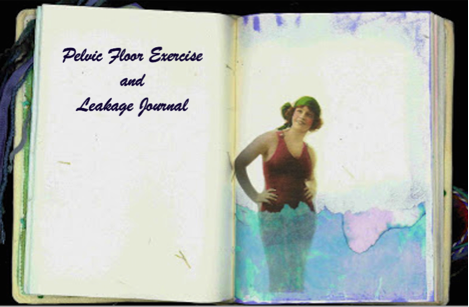
That Patients keep a journal of times exercised per day to aid in the recovery process. Assessing attitude and awareness of urinary incontinence are key to facilitating the best recovery possible.
Journal:
Where to go from here? Urinary Incontinence and the Active Woman
To the mall, to the pool, to the trampoline park!
Okay, perhaps shouting about the prevalence of urinary incontinence to everyone everywhere is not the solution, but to further enhance the lives of women, health care professionals have the unique opportunity to facilitate open dialogue about urinary incontinence and pelvic floor health.
Here are some questions to consider to further improve the individuals’ quality of life:
What…
- can be changed in current patient-practitioner interactions to reduce stigma, heighten awareness and alter treatment implementation techniques to better patient outcomes?
- aspects of the human experience can health care professionals begin to consider when forming an intervention?
- efforts can be put forth to illuminate the frequency of urinary incontinence?
- are current strategies to treat and prevent pelvic floor dysfunction?
Urinary incontinence is not typically a choice topic for conversation, but health care professionals can build a bridge over the inconvenient leak separating women from the quality of life they desire.


